
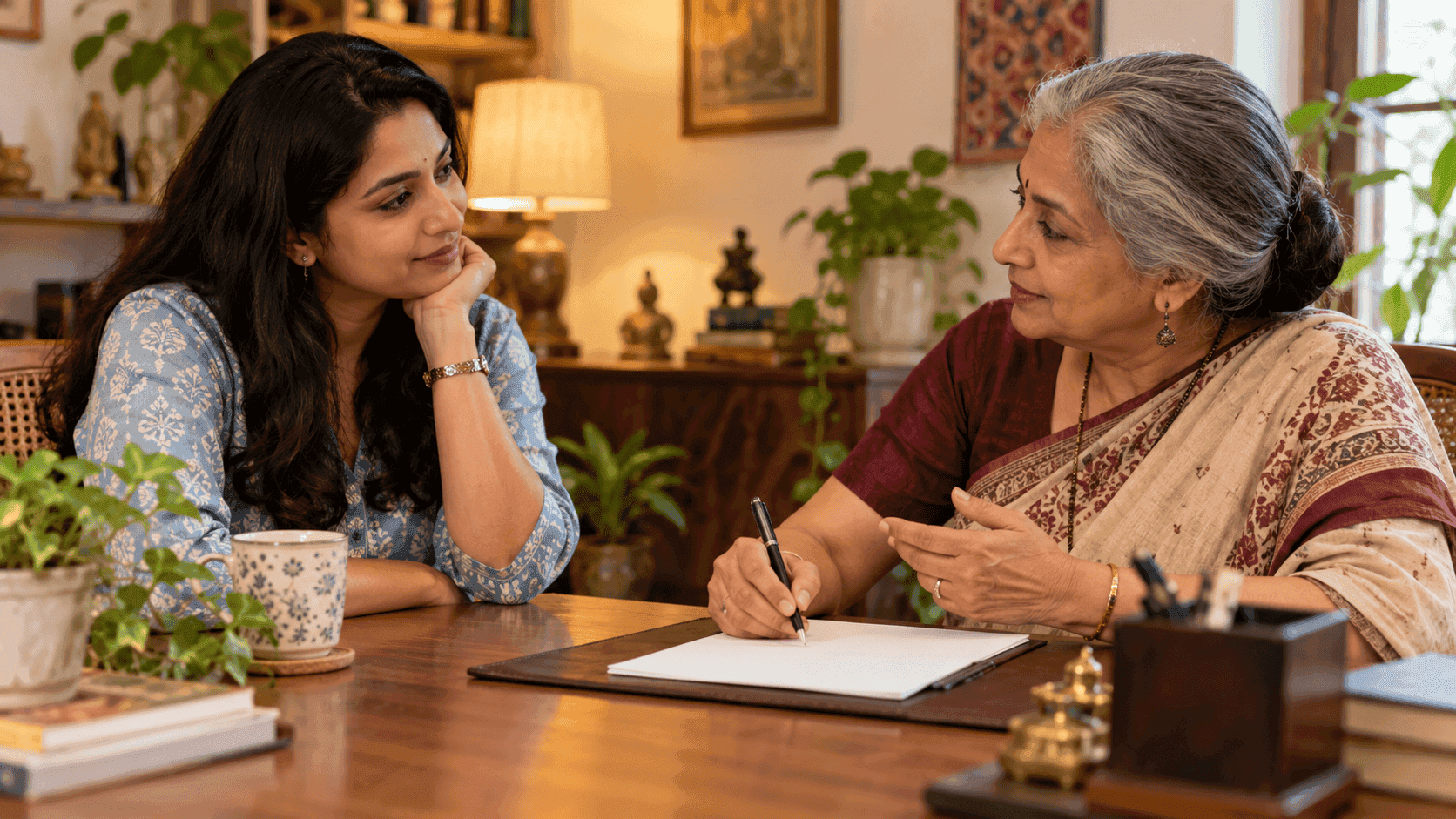
A handwriting or signature report can leave you with a sentence that feels unfamiliar, too broad or simply wrong. You do not need to accept that sentence because it appears in a personalised report. A SoulEra graphologist consultation offers a one-to-one space to ask what the observation means and compare it with your experience.
The useful aim is not agreement with every interpretation. It is to understand the observation, decide whether it offers anything worth exploring, and choose your own next step.
Bring the observation you want to question
SoulEra's consultation service provides a private, one-to-one discussion with a graphologist about handwriting and signature reports. The service includes explanations and personalised guidance. Approach that guidance as material for reflection, not an authoritative account of who you are.
Before the session, select one observation that needs attention. Copy its exact wording and note the part that troubles you. You may disagree with the interpretation, find the language unclear, or recognise it only in a limited situation.
Separate those possibilities in your preparation. A sentence you cannot understand needs clarification before you can decide whether it fits. A sentence you understand but disagree with needs a conversation about the basis for the interpretation and its limits.
Write a short account of your own experience beside the observation. Include something that appears to support it and, if relevant, something that does not. You are not preparing a defence; you are bringing context that the written report cannot supply by itself.
Keep the account specific enough to discuss without sharing more than you want to. You can describe your own choices and responses without identifying other people or disclosing their private information. Decide in advance which topics you would prefer to leave outside the session.
Finally, write down what would make the conversation useful. You might want a plain-language explanation, a narrower interpretation or clarity about why the observation does not fit. You do not have to arrive with a goal of changing yourself.
Ask how the graphologist reached the interpretation
Start by asking the graphologist to explain the observation. Ask what the wording includes and what it does not imply. A broad description should not quietly become a claim about every situation in your life.
Then ask which visible features of the handwriting or signature informed the interpretation. Keep the visible observation separate from the meaning assigned to it. Describing a mark on a page does not establish a fact about your personality or future behaviour.
The following graphologist consultation questions can keep the explanation focused:
- Which features led you to this interpretation, and how did you consider them together?
- What does this particular sentence mean in plain language?
- How tentative is the interpretation, and what are its limits?
- What information from my experience would make you reconsider it?
- Can we leave the observation unresolved if it does not fit?
Listen for the difference between explaining an interpretation and proving it. More detail about a writing feature does not make a personality claim scientifically validated. You can understand the graphologist's reasoning while remaining unconvinced by the conclusion.
Ask for unfamiliar terms to be explained before the conversation moves on. If the explanation becomes broader rather than clearer, return to the original sentence. There is no need to discuss every part of the report before resolving the question you brought.
Compare the observation with your own experience
Once the wording is clear, describe where it does and does not match your experience. Focus on what you remember doing, saying or choosing. Avoid replacing one broad label from the report with another broad label about yourself.
Ask whether the interpretation is specific enough to be useful. A statement that could describe almost anyone may not help you understand your own situation. You can ask the graphologist to narrow the discussion without treating the narrower version as established fact.
Make room for context. Your response may differ depending on the people involved, the time available or how familiar a situation feels. Those differences deserve attention rather than being forced into a single description of your character.
Notice whether you are searching only for memories that agree with the report. Bring back the experiences that do not fit as well. A balanced discussion allows both, without assuming that disagreement reveals something you have failed to recognise about yourself.
If the interpretation still feels wrong, say so directly. You do not need to accept it to make the session worthwhile. Ask to record it as unhelpful or unresolved in your own notes and move to a question that matters to you.
An observation can also be partly useful without being accurate as a description of you. It may prompt a question you genuinely want to consider. Keep the question if it helps, while leaving the original label behind.
Choose a next step without trying to prove the report
If the conversation identifies something you want to explore, choose one small action yourself. Connect the action to a real situation you expect to encounter. Do not choose it merely because the report suggests that you need improvement.
Describe what you will pay attention to and when you will review it. Keep the review about your experience of the action, rather than whether your handwriting changes. A different-looking sample would not prove that your personality or behaviour had changed.
Your notes can stay simple:
- The observation we discussed.
- What I understand about the interpretation and its limits.
- What fits my experience, what does not, and what remains uncertain.
- The question or small action I want to explore, if any.
- When I will decide whether that exploration was useful.
No action is also a valid outcome. You may leave with a clearer understanding of why a statement does not fit. You may decide that another part of the report is worth discussing later, without taking on a new practice now.
Before finishing, check that you can explain the next step in your own words. Ask any remaining question about the guidance you received. Your consultation should leave you free to think, not obliged to agree.
Take your question into the consultation
A useful consultation makes room for clarification, disagreement and uncertainty. Choose one report observation, bring your own perspective and ask how the interpretation was formed. If you want to explore it with a graphologist, bring those notes to a SoulEra one-to-one consultation. Keep only the questions and next steps that you find genuinely useful.