
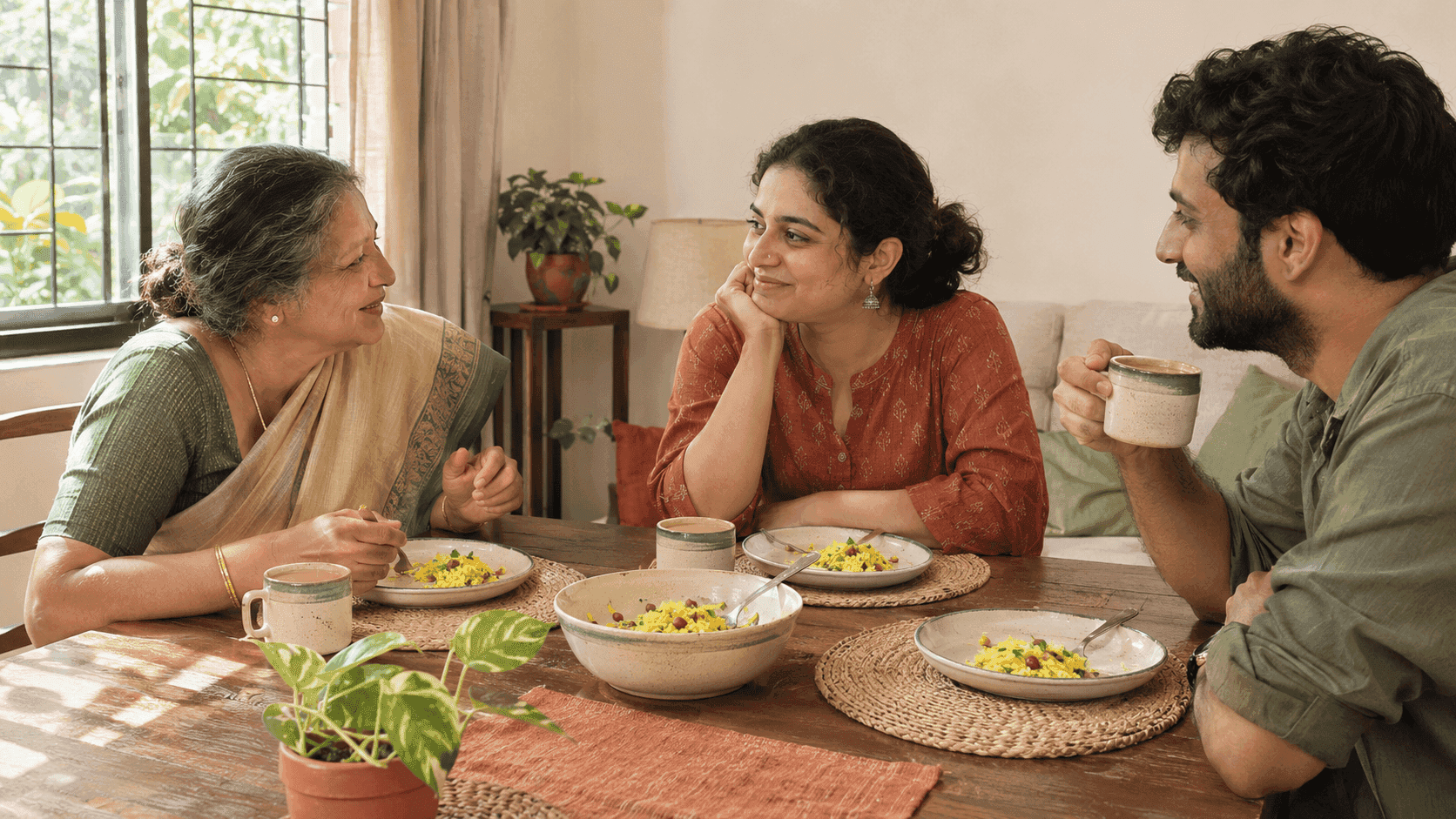
The family breakfast you look forward to now involves an early start, several dishes and a long clean-up. You would love to make it simpler, while keeping the familiar pleasure of everyone sitting together.
Changing family traditions can begin with that distinction. Name what you value in the custom, describe the part you would like to adjust and suggest a limited change. Then leave room for others to explain what the tradition means to them.
Look for the moment you would miss
Choose one everyday custom rather than discussing everything your family does. It might be a monthly meal, an annual cousins' outing or the way you spend someone's birthday. Bring one recent occasion to mind and ask which moment you were glad to share.
Perhaps it was the conversation after breakfast, when nobody was rushing to leave. Perhaps it was hearing a familiar song during the drive. A specific moment gives you something clearer to describe than saying the tradition is important.
Consider what the repetition adds. Knowing that you will meet again may matter as much as the activity itself. A familiar meal might give relatives an easy reason to gather without anyone having to invent a special occasion.
Write from your own experience. “I love knowing we will have that morning together” says what you value. “Everyone only comes for the conversation” speaks for people you have not asked.
There may be more than one thing you want to preserve, and some parts may matter very little to you. You do not need to make the whole arrangement sound wonderful before suggesting a change. Aim for an honest account of what you would miss and what has become difficult.
Separate the meaning from the familiar format
Look at the practical pieces of the custom: when it happens, where people meet, what they do and who prepares it. Which piece creates the difficulty you want to address? Be specific enough that someone else could picture an alternative.
For example, you may enjoy the monthly breakfast but struggle with cooking several dishes before everyone arrives. The proposed change could concern the menu. Moving the gathering, changing the day and inviting different people at the same time would raise several separate questions.
Some parts that seem practical to you may carry meaning for someone else. Preparing a particular dish together might be their favourite part of the morning. Ask before deciding that the menu is incidental or that any replacement would feel the same.
You could say, “For me, the best part is sitting together afterwards. Which part do you most look forward to?” Listen for the actual answer. Someone may mention the cooking, the familiar place or simply seeing a relative who rarely joins other plans.
Notice the work as well as the pleasure. Ask what preparation people enjoy and what has become tiring. Avoid assigning those feelings by age or family role. The person who usually cooks may want help, may want a smaller menu or may enjoy continuing. Let them describe their experience.
Suggest one change people can picture
Before raising the idea, try a short private handwritten note. Finish these sentences: “What I want to keep is…”, “The part I would like to change is…” and “What I am asking for is…”. Read the words for clarity, without interpreting your letter shapes or anyone else's motives.
This may help you notice that your first idea was broader than your actual concern. “Our breakfasts take too much effort” could become “I find preparing three dishes before nine difficult”. The second version explains your situation and leaves others room to respond.
Choose a moment before arrangements are settled. The person cooking may find it hard to discuss a new version while serving the current one. Give the idea room to be considered without presenting it as an announcement.
Make the proposal concrete: “Could we keep our usual Sunday breakfast here, but have one main dish next time? I would like more of the morning at the table with everyone.” This connects the change to something you want to preserve.
Be clear about any part you are offering to take on. Avoid solving your own difficulty by quietly adding work for someone else. If your suggestion depends on contributions from other relatives, ask them rather than volunteering them.
Limit the proposal to the occasion you mean. Trying a simpler breakfast next month does not require deciding how every future gathering will work. Equally, if you want a lasting change, say so rather than describing it as temporary to make agreement easier.
Hear what others want to preserve
People may have different responses. One relative may welcome the idea, another may suggest a variation and someone else may prefer the familiar arrangement. These responses do not tell you how much each person cares about the family.
Ask about the specific concern. “Which part would you miss?” may bring out something you had not considered. Repeat what you understood before offering another suggestion: “Making that dish together is part of the morning you enjoy.” You can acknowledge that without pretending your own difficulty has disappeared.
Leave space for an answer you cannot neatly combine with yours. A careful conversation does not guarantee agreement. You may settle one part, need more time or discover that this particular proposal does not work for the people involved.
If you do agree to a different version, keep its scope clear. Afterwards, ask what still felt familiar and what people missed. Let those experiences inform another conversation without requiring everyone to declare the change a success.
If you choose to explore a handwriting interpretation, treat its suggested themes about expressing needs as prompts for reflection. Compare any prompt with your own experience and remain free to disagree. Handwriting cannot establish a relative's motives, diagnose a condition or predict how a family conversation will go. The meaning of the custom comes from the people sharing it.
Carry the meaning into the conversation
Changing a family tradition starts with an honest description of what you value and what you would like to adjust. Offer a version people can understand, ask what matters to them and allow for different answers. A shared custom can develop through these conversations, without requiring you to dismiss its past or promise that everyone will welcome the same future.